
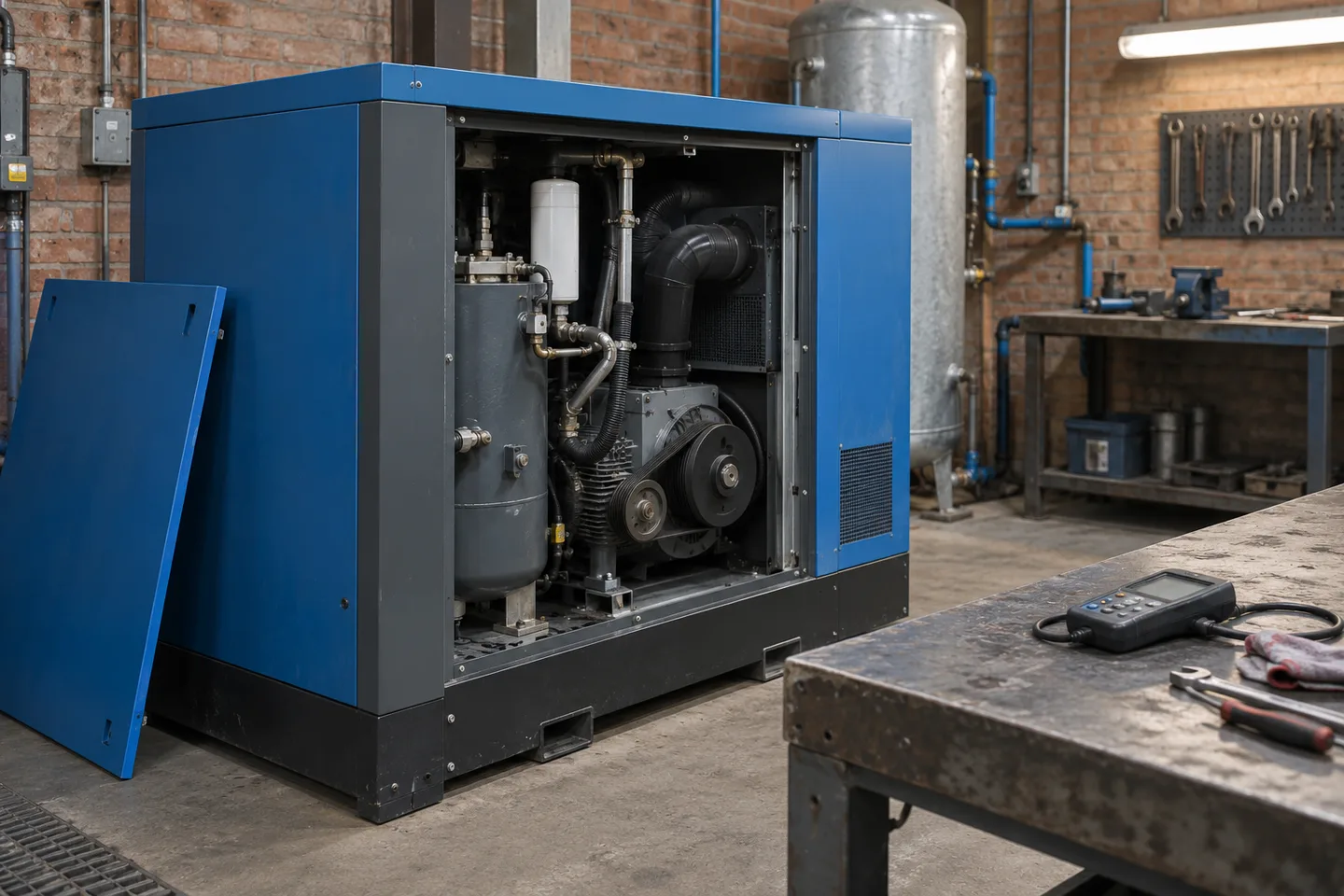
Fault investigation and repair scope
Repair work starts with establishing the problem before deciding which work or replacement parts are needed. Your enquiry may concern equipment that will not start, a recorded shutdown or a change in the air supply available to your operations.
Describe the symptom without assigning a cause you haven’t confirmed. A recurring problem, a fault following recent maintenance and a sudden stoppage each provide different context for the investigation.
Explain what has happened
Include these details where known:
- The compressor make and model.
- The observed symptoms and any existing fault message.
- When the problem began and whether it has happened before.
- Whether the equipment is running or out of use.
- Recent servicing, repairs or changes already recorded.
- The Stoke-on-Trent site postcode and access arrangements.
Use existing information. Don’t restart equipment, remove covers or reproduce a fault to prepare your message.
Make the business impact clear
Explain whether the problem has stopped all work using compressed air or affects a particular machine or activity. State your required timing and any restrictions on when investigation or repairs could take place.
If a warranty or service agreement applies, mention it alongside any previous repair records. For an immediate safety concern, follow your established site procedures and existing emergency arrangements.
Discuss the repair needed
Send Air Compressors Stoke-on-Trent your fault description, equipment details and business impact through the contact form. Identify anything still unknown so the enquiry reflects what has actually happened.